

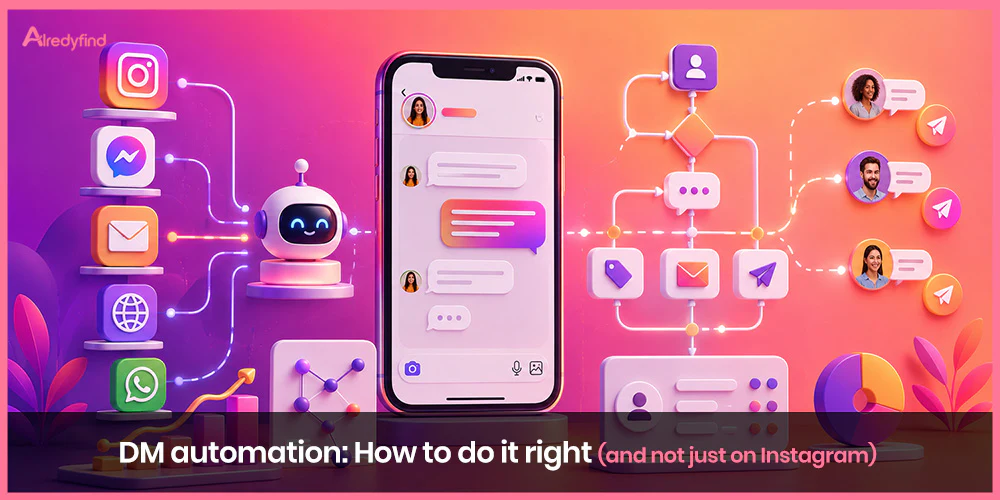
Direct messages have become one of the most valuable channels for creators, brands, and businesses. They’re personal, high-intent, and often where sales, support, collaborations, and relationships actually happen. The problem? Inboxes grow faster than any human can keep up with.
That’s where DM automation comes in. Done poorly, it feels like spam and risks account restrictions or lost trust. Done right, it responds instantly to interested people, captures leads, answers common questions, and frees you to handle the conversations that need a real person.
This guide covers how to automate DMs effectively across platforms—not just Instagram—while staying compliant, useful, and human. It draws from current best practices, platform rules, and what actually works in 2026.
What DM Automation Really Is (and Isn’t)
DM automation uses tools and workflows to send, receive, organize, or respond to direct messages based on triggers. Common triggers include:
Someone commenting a keyword on a post or Reel
Replying to a Story
Sending a specific message or emoji
Following (in limited cases, depending on the platform)
Interacting with an ad
It is not cold outreach to people who never engaged with you. Platforms like Instagram (via Meta’s rules) and others strictly limit or prohibit unsolicited automated messages. The safest and most effective automation is always user-initiated.
Popular tools include ManyChat, CreatorFlow, LinkDM, and platform-native features, plus options for WhatsApp, Facebook Messenger, LinkedIn, and others. The best ones connect through official APIs rather than unofficial scrapers or browser extensions that request your password.
Why Most Automation Fails—and How to Avoid It
Generic “Thanks for commenting! Here’s my link 👇” messages sent to everyone feel robotic. High-volume cold DMs get reported. Ignoring platform messaging windows or rate limits leads to restrictions.
Successful automation follows a few core principles that appear consistently across expert guides:
User-initiated only — Never message someone who hasn’t engaged first.
Context over volume — Reference what the person actually did or asked.
Value first — Deliver the requested info or help before any pitch.
Human escalation path — Route complex, emotional, or negative conversations to a real person.
Measure and refine — Track what works and improve continuously.
These principles apply whether you’re on Instagram, Facebook Messenger, WhatsApp, LinkedIn, X, or elsewhere.
How to Set Up Effective DM Automation
Define clear goals Are you capturing emails/leads, delivering links or resources, answering FAQs, booking calls, supporting customers, or nurturing sales? One focused goal per flow works better than trying to do everything at once.
Choose the right tool and connect properly Use Meta-approved tools for Instagram and Facebook (ManyChat is a long-standing official partner). For WhatsApp, look for Business API solutions. LinkedIn has stricter limits and often requires more careful, lower-volume approaches. Avoid anything that asks for your login password or uses unofficial methods.
Map simple, high-value workflows Start with the highest-volume, most repetitive requests:
Comment “LINK,” “GUIDE,” or a keyword → Instant DM with the resource
Story reply → Follow-up with more info or a question
Common support questions → Keyword-triggered answers
New high-intent interactions → Welcome sequence that asks a qualifying question
Keep flows short. One or two messages that solve the immediate need, then an easy way to continue or talk to a human, usually performs best.
Write messages that sound human Use natural language. Reference the specific post or action. Keep it concise (especially important on mobile). Offer a clear next step without pressure. Test the exact message the recipient will see before activating.
Example of a strong comment-to-DM flow: User comments “LINK” on a product post. Automation replies: “Hey! Here’s the exact product from that post: [link]. Let me know if you have sizing questions—happy to help.”
Respect platform rules and limits Instagram’s key constraints (as of 2026) include the 24-hour messaging window after user engagement and practical rate guidance around 200 DMs per hour with official tools. Stay inside the window by responding quickly and designing flows that invite a reply (which can extend the conversation). Other platforms have their own windows, tags for outside-window messaging, and anti-spam systems.
Build in handoff and monitoring Set triggers for negative keywords, long messages, or VIP users so a human can take over. Use a unified inbox when possible so your team sees full context. Review performance regularly: click-through rates, reply rates, and sentiment.
Beyond Instagram: Platform-Specific Considerations
Facebook Messenger — Strong official automation support. Great for longer conversational flows, buttons, and integrating with ads. Use friendly, natural language and clear purpose for each flow.
WhatsApp — Highly effective for support and sales in many markets, but requires Business API compliance, template messages for proactive outreach, and careful opt-in practices. Response speed expectations are high.
LinkedIn — More professional tone required. Comment-to-DM can work for lead generation, but volume must stay low and personalization high. Cold automation is heavily restricted and risky. Focus on value-first messages after genuine engagement.
X (Twitter) — Fast-moving. Automation helps with mentions and quick replies, but the platform is sensitive to spam-like behavior. Keep it relevant and timely.
TikTok and others — Comment-triggered DMs are growing, but rules and available tools vary. Always prioritize official or well-established methods.
Cross-platform tools and unified inboxes help maintain consistency without forcing the exact same message everywhere. Tone and expectations differ by network.
Best Practices That Scale Without Losing Trust
Personalize with context or available data (name, specific post, previous interaction).
Segment when possible—different flows for different content types or audience groups.
Preview every message in the recipient’s view.
Avoid over-automation. Let automation open doors; humans close important conversations.
Test small, measure results (CTR, replies, conversions, reports), then expand.
Keep an eye on platform policy updates—rules evolve.
Combine with good inbox management so nothing falls through the cracks.
When automation feels helpful rather than salesy, response rates and conversions rise significantly compared with generic blasts.
Common Mistakes That Cause Problems
Messaging people who only followed or liked (no qualifying engagement).
Sending identical messages regardless of context.
Pushing sales before delivering value.
Using unofficial tools that risk account flags.
Ignoring rate limits or the 24-hour window.
Leaving no easy path to a human.
Setting it and forgetting it without reviewing performance.
Measuring Success
Track delivery rates, click-through rates on links, reply rates, conversion metrics (emails collected, purchases, bookings), and qualitative feedback. Healthy professional automation often sees solid CTRs in the 15–25% range on well-matched offers, with meaningful replies that indicate the message resonated. Low engagement or rising reports signal the need to refine messaging or triggers.
FAQ
Yes, when it follows the rules. On Instagram and Facebook, it must be user-initiated (via comment, Story reply, existing DM, etc.), stay within messaging windows, use official API tools, and avoid spammy behavior. Other platforms have similar requirements around consent and relevance. Cold, unsolicited automation is generally restricted or prohibited.
Official Meta partners like ManyChat are allowed when used correctly. Bans or restrictions usually come from aggressive volume, spam-like messaging, combining with unofficial tools, or violating the 24-hour window and user-initiation rules—not from the approved tool itself. Stay under practical rate limits, keep messages relevant, and monitor performance.
Begin with one high-intent, user-triggered flow (for example, keyword comments on your best-performing posts). Use an official tool, write a helpful and contextual message, preview it, test with a small audience or limited posts, measure results, and only then expand. Always provide a way for users to reach a human.
On Instagram, simply following does not open the automated messaging window in the same way a comment or Story reply does. Welcome sequences work best when triggered by a qualifying action. Other platforms vary—always check current rules and prioritize consent.
DM automation is often lighter and more trigger-based (especially comment-to-DM or simple keyword replies) designed for social platforms. Full chatbots can handle longer, multi-step conversations with logic, buttons, and data collection. Many modern tools blur the line, letting you start simple and add sophistication as needed. The best systems combine both with easy human handoff.

